
Linus Torvalds has announced the fifth release candidate (RC5) for Linux Kernel 6.16, and things are moving along just as expected. RC5 focuses on drivers, filesystems, and minor bug fixes across the board.
Linus describes this stage as "fairly regular". This signals a smooth development process. No major surprises, just the kind of steady progress you'd hope for at this stage in development.
Table of Contents
What’s New in Linux 6.16 RC5?
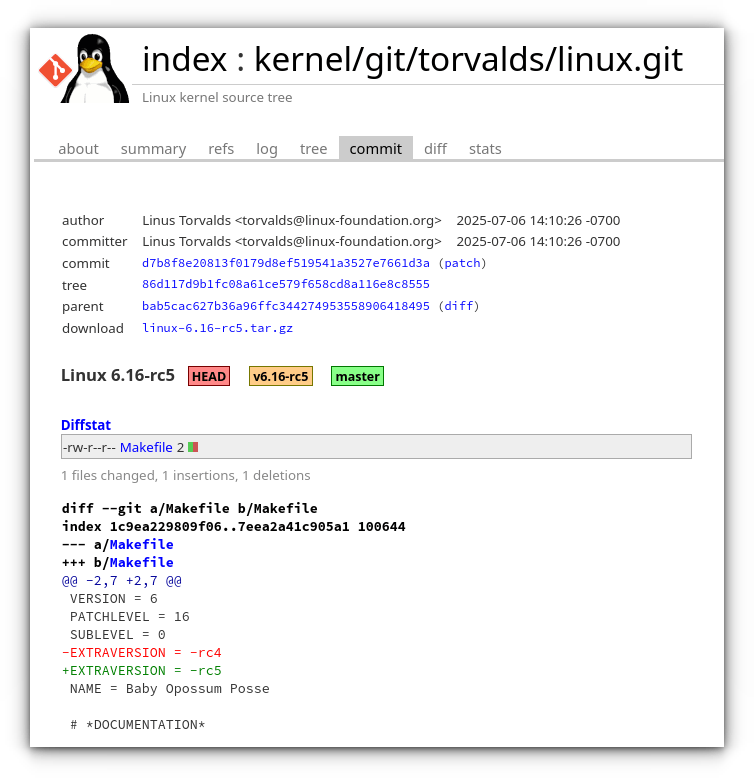
The majority of updates this week center around drivers and subsystems. GPU and networking drivers see the most changes, but USB, RTC (real-time clock), and platform drivers get attention too.
This is common during this point in the release cycle as testing ramps up and bugs surface in hardware-related code.
Here’s a breakdown of the highlights:
1. Driver Updates
RC5 includes a large number of fixes across various drivers:
- Graphics (GPU): Continued improvements in AMDGPU and Intel Xe drivers. Fixes for KFD queue suspension, doorbell callbacks, and display power management.
- Networking: Enhancements in drivers like
enic,virtio-net,txgbe, andamd-xgbe, addressing TX failures, IRQ issues, and offload behavior. - USB: Bug fixes in xHCI and Type-C code, including stream handling, resume behavior, and gadget TRB reclaim logic.
- Input: Improvements in ALPS, atkbd, and Lifebook support. Better handling of debug logs and race conditions.
- Platform Drivers: Fixes for Mellanox, Dell, HP, and ThinkPad platform drivers, ensuring clean shutdowns and proper class device unregistration.
2. Filesystem Fixes
Several filesystems got small but important updates:
- XFS: Deadlock prevention, better tracepoints, and fixes for unmount hangs.
- Btrfs: Bug fixes in log replay, inode handling, and rmdir operations to avoid directory races.
- Bcachefs: Improvements in transaction management and journal replay handling.
- SMB, NFS, CIFS: Various fixes to reconnect behavior, symlink handling, and negotiation timeouts.
Notably, several of these filesystems submitted their updates in the past week leading up to rc5.
3. Other Core Changes
- Memory Management: Cleanups in the anonymous inode system and proper locking around critical paths.
- RTC: Support for new devices like S2MPG10 and cleanups in the S5M series drivers.
- ARM/ARM64 & RISC-V: Updates in device trees and build system adjustments, such as stricter compiler requirements (e.g., Clang 17 for kCFI on RISC-V).
Beyond these, the release includes a "random sprinkling of fixes". This ensures overall kernel stability and performance.
Linus Torvalds' Perspective on RC5
In the Kernel 6.16 RC5 release mail, Linus Torvalds noted that "Absolutely nothing in here looks all that odd" for Linux 6.16-rc5.
This positive outlook suggests that the development branch is progressing as expected, with no major surprises or roadblocks.
The Linux 6.16 Release Cycle So Far
The journey to Linux 6.16 has been largely consistent.
- The 6.16 release cycle began with a "fairly normal" merge window, as described by Torvalds himself. While there was a slight "upward bump" in "late straggler" pull requests at the end of the second week, the overall statistics for the merge window looked "pretty normal".
- Linux 6.16-rc1 saw about half its changes in driver updates, particularly for GPU and networking, with non-driver changes split among architecture updates, documentation and tooling, and core kernel changes like filesystems and networking. It involved just under 13,000 non-merge commits and closer to a thousand merges, contributed by 1,783 unique authors.
- Linux 6.16-rc2 was notably "pretty quiet" and "even smaller than usual". Torvalds speculated this might be due to developers taking a breather after the merge window or seasonal summer vacations in Europe. The changes in rc2 were mostly in network drivers, Bluetooth, and Bcachefs, along with some Rust infrastructure and core networking changes. Build and Qemu tests for rc2 reported some failures, with fixes already submitted.
- However, development picked up, and Linux 6.16-rc3 was "right in the usual ballpark" for its stage, appearing "entirely normal". Its changes were dominated by wireless networking and GPU driver updates, though these were not "really anything huge".
- Linux 6.16-rc4 also maintained a "fairly calm" trajectory. About one-third of its diff was filesystem updates (predominantly Bcachefs, but also SMB and Btrfs), another third covered drivers (with device mapper standing out due to performance-related reverts), and the remaining third comprised miscellaneous fixes, including documentation updates, architecture fixes (LoongArch, x86), and self-tests.
The continued "normalcy" of rc5 after these previous stages indicates a healthy and predictable release process.
Test Linux Kernel 6.16 RC5
As Linus Torvalds consistently reminds the community, "Please keep testing".
If you maintain hardware drivers, use bleeding-edge Linux features, or contribute to kernel development, please test Kernel 6.16 RC5 and report bugs.
You can get the latest Linux Kernel 6.16 RC5 from the Kernel.org website or the Linus Torvalds's git tree.
Testing RC5 on your development systems (not production) helps ensure a smoother final release. It's also a good time to review changelogs relevant to your use cases.
Linux 6.16 RC5 doesn’t bring major shifts, but that’s a good thing. Stability, polish, and predictability are exactly what a kernel should aim for this late in the cycle.
Keep an eye out for RC6 next week.
