
Recently, OpenAI removed the chat discovery feature from ChatGPT that allowed conversations to be found by search engines like Google.
It might sound surprising, but for a short time, some of your ChatGPT conversations could have been seen by anyone online.
This was part of an experiment by OpenAI to help people discover useful conversations. But frankly, it introduced a big risk for our private information.
What was this "Discovery Feature" anyway?
Imagine you had a chat with ChatGPT and found it super helpful. There was a "share conversation" button.
If you clicked this, and then clicked a second "create link" button, you could get a special link to your conversation.
You could then choose to make that link discoverable by search engines. OpenAI stated that your name and custom instructions would remain private when sharing.
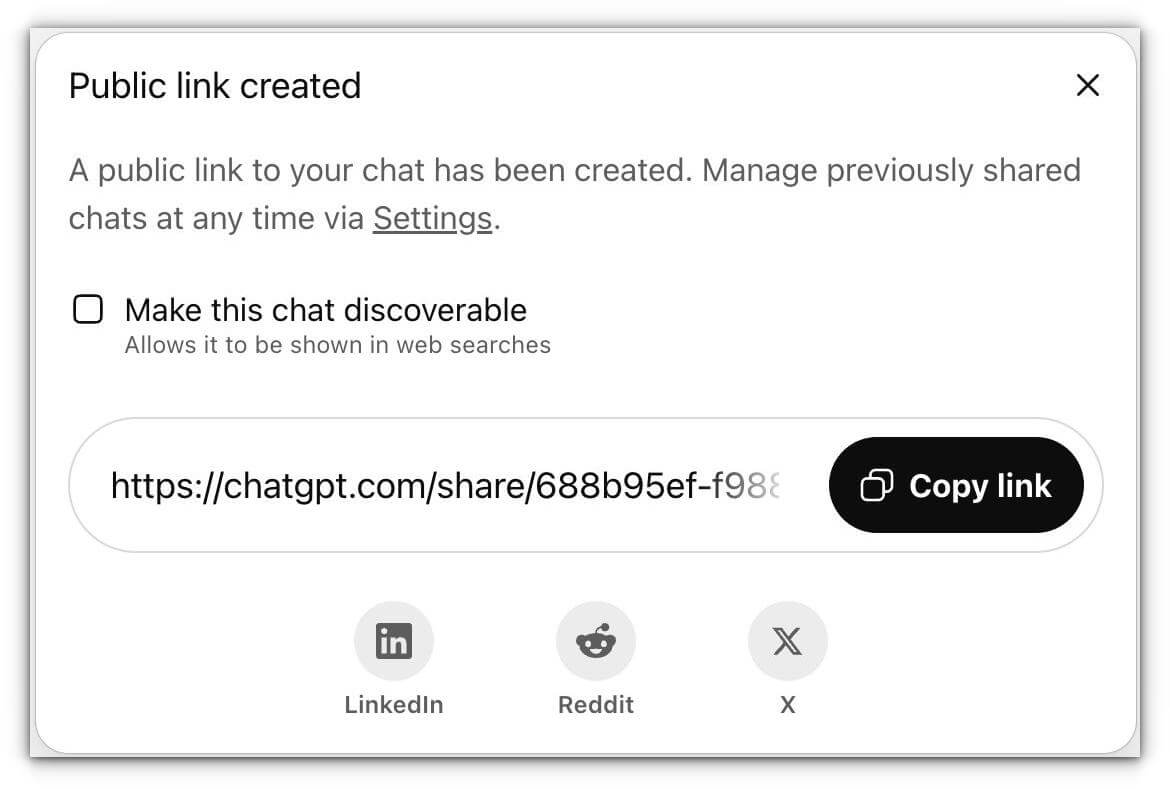
While it sounds like you had control, the problem was that many users might not have realised that their shared links could then be indexed by Google and other search engines.
This means if the link was somewhere search engines could find it, it could show up in search results.
The Actual, Big Problem is Accidental Sharing and Data Leaks
This public discovery feature quickly showed its downsides. People started noticing that searches on Google, for example, could reveal strangers' conversations.
And these weren't always innocent chats about movie downloads or DIY ideas. We're talking about really sensitive stuff.
- Business secrets and strategies: When the ChatGPT conversations were shared, even by accident, they could expose private company strategies, client names, or confidential research to competitors. It was like a "data leak waiting to happen".
- Personal information: Some searches revealed conversations containing personal names, job roles, and even ages.
A LinkedIn post highlighted that many shared ChatGPT conversations were being indexed by Google, making them publicly accessible. At the time of this post, over 70,000 shared conversations were publicly viewable.
Even when users shared chats with the intention of sharing them only with "friends, colleagues, or small groups", these conversations could still appear in Google search results.
Anyone could use a simple search technique, known as Google dorking, by typing "site:chatgpt.com/share [keyword]" to find these publicly shared chats.
Even though users had to opt-in, it seems many didn't fully understand the implications. Clicking that "share conversation" button, perhaps unknowingly, opened the door to their chats becoming public.
OpenAI Removed ChatGPT Chat Discovery Feature
OpenAI has been clear about their reason for pulling the plug on this feature. As DANE, the CISO (Chief Information Security Officer) at OpenAI, stated on X (Twitter), they removed the feature because it "introduced too many opportunities for folks to accidentally share things they didn't intend to".
They said that security and privacy are extremely important to them, and this change helps reflect that.
It was truly a "short-lived experiment".
What Happens Next? (For you and your past chats)
OpenAI is now working to remove any content that was indexed by search engines. However, it's always a good idea to be proactive when it comes to your own data.
Here’s what I recommend you do, especially if you've ever shared ChatGPT conversations:
- Check your shared chats: You should audit any conversations you've shared in the past.
- Search for your brand (if you have one): Try searching your brand name along with
site:chatgpt.com/shareon Google to see if any of your company's information was indexed. - Delete shared links: You can manage and delete your shared links by going to
Settings > Data Controls > Shared Links > Managein your ChatGPT account. This will help prevent your chats from being shared and indexed. - Educate your team: If you're using AI tools at work, make sure everyone understands the privacy risks involved. Treat AI outputs just like any other confidential document.
- Be cautious with public chats: There's also a warning about interacting with shared public ChatGPT chats due to a risk of "prompt injection". It's best to avoid them.
Prioritising Privacy
This whole situation really highlights the importance of AI governance and data hygiene. While AI tools are fantastic for collaboration and creativity, we need to be very careful about the information we put into them, especially if there's any chance it could become public.
OpenAI's decision shows they're listening to user concerns about privacy. It's a good reminder for all of us to be mindful of what we share online, especially with powerful new tools like AI.
Your privacy matters, and keeping your conversations private is key!
