
Linus Torvalds released the fourth release candidate (RC4) for Linux Kernel 7.1 on Sunday, 17 May 2026. This update follows the weekly pattern of fixing bugs and calming down the code before the final launch. If you track kernel news, this week features an important discussion about how people use AI to find bugs.
High Volume is the "New Normal"
For several weeks, the kernel team has noticed a lot of changes in each update. While some hoped the large number of patches in version 7.0 was just a fluke, RC4 confirms that this is simply the "new normal" for the kernel. Even at this stage in the development cycle, the volume of changes remains fairly high.
What's New in Linux 7.1-rc4
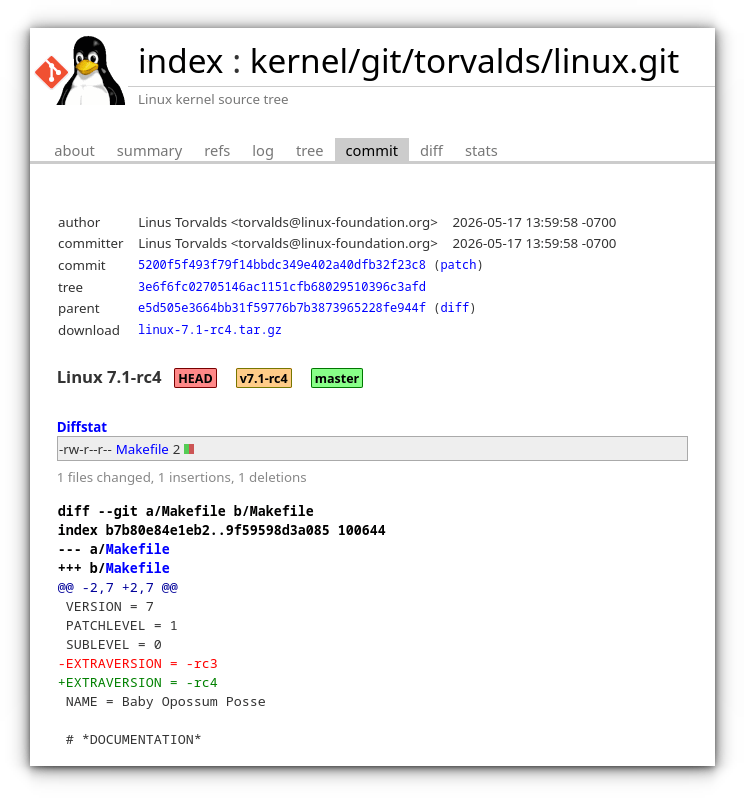
The composition of this release is quite balanced:
- Driver Fixes: About half of the total patch focuses on drivers, with GPU drivers leading the way.
- Core Systems: The rest of the update includes fixes for networking, filesystems, and architecture updates.
- Hardware Spotlight: This version includes a specific fix for native backlight support on HP OMEN 16 laptops.
The AI Bug Report Problem
The most interesting part of the Linux 7.1 RC4 announcement involves a "flood" of bug reports generated by AI tools.
In the Linux 7.1-rc4 announcement mail, Linus Torvalds noted that these reports have made the kernel security mailing list almost impossible to manage.
Some of the documentation updates might be worth highlighting: the continued flood of AI reports has basically made the security list almost entirely unmanageable, with enormous duplication due to different people finding the same things with the same tools.

Because many people use the same AI tools, maintainers are seeing massive amounts of duplicate reports.
This creates "pointless churn" because developers must spend their time pointing out that a bug was already fixed weeks or months ago.
How to Use AI Tools Correctly
Torvalds made it clear that the community should use AI tools to help, not to create extra work. He shared a few rules for those using AI to report bugs:
- AI bugs are not secret: Treating these reports as "private" on secure lists is a waste of time because the tools are public.
- Add real value: Don't just send a random report without understanding it.
- Read and Code: To truly help, you should read the documentation, understand the code, and write a patch to fix the bug you found.
Download and Test Linux Kernel 7.1 RC4
If you want to help stabilize the kernel, you can find the Linux 7.1-rc4 source code at the Official Linux Kernel Archives and the Linus Torvalds's git tree. However, please remember that RC kernels are for testing.
These releases are "prepatch" versions mainly intended for developers and Linux fans. You must compile the kernel from source to use it. Because this version is not yet "stable", you should only use it on a test machine, not on a computer you need for your daily work.
What is Next?
We are now in the fourth week of the seven-week stabilization period. We can expect a new release candidate every Sunday for the next few weeks. If everything goes well, the final, stable version of Linux 7.1 will arrive after the seventh or eighth release candidate.
