
Linus Torvalds officially announced the first release candidate (RC1) for the upcoming Linux Kernel version 6.19. This marks the end of the merge window, and the kernel development team now shifts focus to bug fixing and stabilization.
In the Linux 6.19-rc1 release announcement mail, Linus noted that the timing of this release was "slightly unusual", partly because several key maintainers had been traveling for the yearly maintainer summit the previous week. But, despite these unique scheduling patterns, the overall content of the release looks "pretty normal".
Table of Contents
Key Improvements in Linux Kernel 6.19 RC1
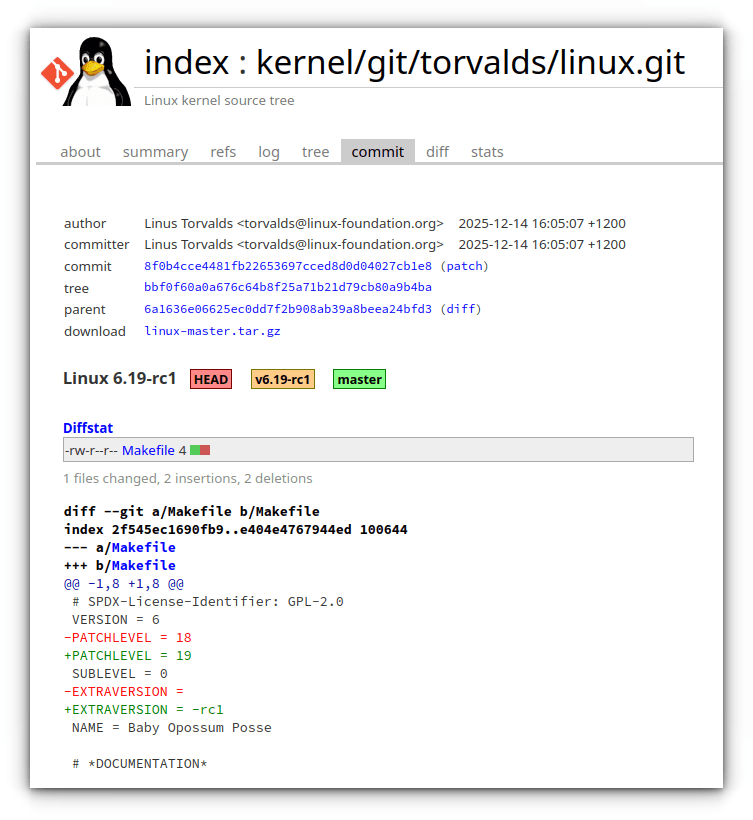
Let us look at the most significant changes and improvements packed into this Linux Kernel 6.19 Release Candidate 1.
1. Drivers Lead the Way
As we often see in new kernel versions, hardware support makes up the largest segment of the new code.
Approximately half of the entire rc1 patch consists of driver updates. This substantial effort ensures that Linux works seamlessly with the newest computers and components.
The largest areas receiving these driver updates include:
- GPU (Graphics Processing Unit)
- Networking
- Media
- Sound
While drivers took up half the patch, developers spent the rest of their time updating architecture support, tools, documentation, and core systems like memory management (MM), the scheduler, and further networking components.
2. Smarter Code and Rust Growth
The 6.19 merge window included important, foundational work that improves how the kernel manages itself.
2.1. Compiler Cleanup Efforts
Several core pull requests focused on expanding and using more of the automatic compiler cleanup infrastructure. This technical cleanup occurred across multiple subsystems. The Virtual File System (VFS) layer particularly stands out as a key area for this type of conversion.
There are 17 updates submitted specifically to the VFS layer. These updates cover important internal operations, including iomap updates, namespace management, directory locking updates, and folio updates.
2.2. Rust Moves to Real-World Code
The development surrounding the Rust programming language continues to mature within the kernel project. Now, the effort moves beyond simply building the necessary preparation and infrastructure. We now see the phase transition into "actual driver and subsystems development", as several real drivers begin to take shape.
Key Features and System Enhancements
Beyond the major infrastructure changes, many specific security and hardware features made it into this release. The Linux 6.19-rc1 merge log reveals a massive effort from numerous contributors across almost every area of the kernel.
Architecture and Security Updates
- x86 Improvements: Developers merged key updates for x86 architectures, including changes for SEV (Secure Encrypted Virtualization) updates and CPU mitigation updates. Other core x86 updates arrived from Linus Torvalds.
- Security Features: The release also includes updates for key security mechanisms such as Landlock, TPM (Trusted Platform Module), LSM (Linux Security Modules), and integrity checks.
- Networking Security: A notable update brings support for PCIe Link Encryption and Device Authentication.
Core Component Refinement
Top kernel maintainers contributed significant updates to core functions:
- Scheduler and Locking: Ingo Molnar contributed 17 updates, focusing heavily on locking updates and scheduler updates, alongside fixes for core kernel infrastructure and performance events.
- Memory and I/O: Andrew Morton contributed updates to Memory Management (MM). Furthermore, Jens Axboe merged updates for the
io_uringhigh-performance I/O interface and the block layer. - Filesystems: Filesystem support continues to evolve, with updates for popular systems like btrfs, xfs, ext4, and gfs2. Significantly, the ntfs3 driver received updates.
Download and Test Linux 6.19-RC1
As with every release, developers and Kernel enthusiasts are asked to start testing and fixing.
The Kernel 6.19 RC1 version can be downloaded from the Kernel.org website or the Linus Torvalds's git tree.
Following the announcement, Luna Jernberg confirmed that they successfully built and ran the 6.19.0-rc1 kernel on their Dell Latitude 7390, noting that it "works fine".
Kernel 6.19 Estimated Final Release Date
Kernel development cycles normally begin with a 2-week merge window, followed by a series of weekly release candidates (RCs). Most releases use about 7 RCs before the final version goes stable, though in some cycles an 8th RC is needed.
Linux 6.19-rc1 was released on December 14, 2025. If the usual pattern holds, each subsequent RC would arrive about one week later.
Counting from rc1 on Dec 14, 2025:
- rc2: Dec 21, 2025
- rc3: Dec 28, 2025
- rc4: Jan 04, 2026
- rc5: Jan 11, 2026
- rc6: Jan 18, 2026
- rc7: Jan 25, 2026
- Final release: Typically one week after rc7: Feb 1, 2026 (assuming 7 RCs)
If test results show more regressions or issues, there could be an 8th RC, pushing the final release one week later to around Feb 8, 2026.
So, I guess the final stable release of Linux Kernel 6.19 is expected around February 1, 2026 under the typical 7-RC schedule. If an extra RC is needed, it could slip to about February 8, 2026.
Download Linux 6.19-rc1 today, give it a try, and report any issues you find.
Read Next:
