
Linus Torvalds officially announced the first release candidate (RC1) of the upcoming Linux Kernel version 7.0. This news marks the end of a busy two-week "merge window" where developers added a lot of new code to the kernel. While a jump to version 7.0 sounds like a massive change, the reality is a bit more simple.
Table of Contents
Why Is It Called Version 7.0?
As you already know, the previous major Kernel version was 6.19. You might think a new major version number means the developers added giant new features or removed old ones.
However, Linus Torvalds explains that this is not the case. He chooses to move to a new major number roughly every three and a half years simply because he finds large version numbers confusing.
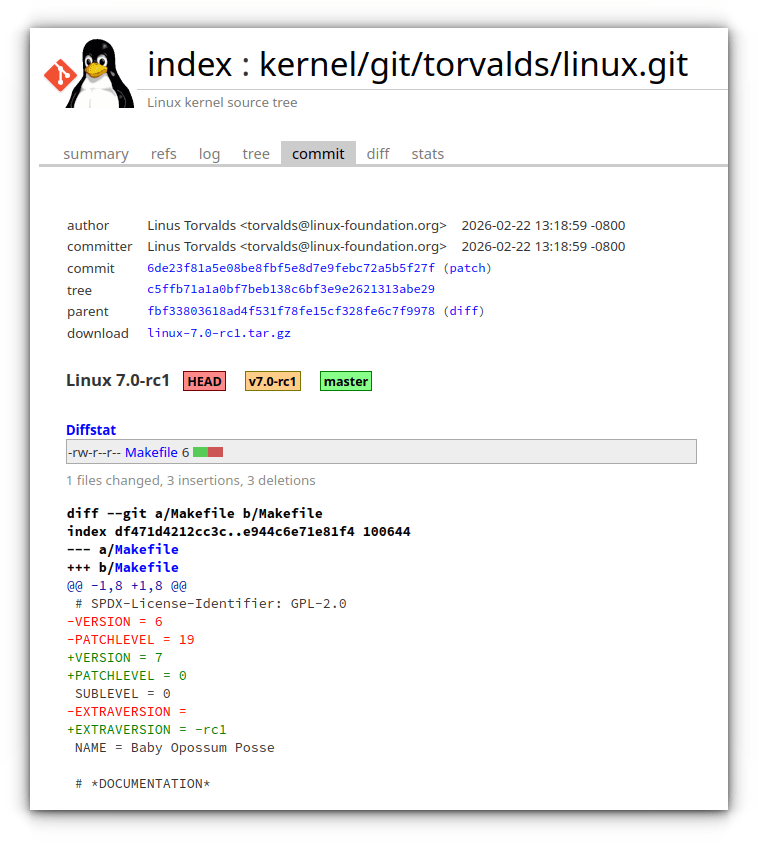
He calls this release a "solid progress" marker rather than a total overhaul. So, if you were worried about big changes breaking your old systems, you can relax. This release follows the same steady path as previous updates.
A Smooth Start for Developers
The process of bringing all this new code together went very well this time. In the Linux 7.0-rc1 release announcement mail, Linus describes the last two weeks as a "fairly smooth" merge window. He measures success by whether the new code breaks his own computers.
Surprisingly, he did not have to fix any major boot failures on his machines during this period. Because the code worked well for him, he now wants the community to help.
He encourages users to test-build and test-boot the new kernel to make sure it works on all kinds of hardware.
What Is Inside the New Kernel 7.0 RC1?
The update contains a huge amount of technical work. Most of the changes—about two-thirds of the new code—focus on drivers. Drivers are the essential pieces of software that help your computer talk to your hardware, like your mouse, screen, or printer.
The remaining one-third of the update covers several key areas:
- Better Hardware Support: Developers updated code for many types of computer chips, including x86, ARM, and RISC-V.
- File Systems: Popular ways to store data, such as btrfs, xfs, and nfs, received important updates to keep your files safe and accessible.
- Core Improvements: The team improved how the kernel handles memory and how it schedules tasks for the processor.
- New Technologies: This release continues to integrate the Rust programming language into the kernel, which helps make the system more secure.
Download and Test Linux Kernel 7.0 RC1
If you enjoy testing new Kernel release, now is a great time to start. Linus notes that there are "way too many changes" to list them all individually. By testing the release candidate (rc1) now, you help find bugs before the final version arrives.
In short, Linux 7.0-rc1 is a steady, well-built update that keeps the kernel moving forward. It shows that even without "big and exciting" headlines, the Linux world continues to improve every single day.
You can get the Kernel 7.0 RC1 from the Kernel.org website or the Linus Torvalds's git tree.
Estimated Final Release Date for Linux Kernel 7.0
With RC1 released on February 22, 2026, the Linux 7.0 development cycle now enters the stabilization phase.
The Linux kernel follows a very consistent release rhythm. After RC1, new release candidates are published weekly. Most cycles include seven release candidates (RC1 through RC7). If everything looks stable by RC7, the final version is released that same weekend.
Based on the standard 7-week cycle:
- Projected release after RC7: April 12, 2026
- If an RC8 is needed: April 19, 2026
In practice, most kernel versions do not require an RC8. Unless unexpected regressions appear, Linux 7.0 will likely see its final stable release in mid-April 2026.
As always, the exact date depends on testing results and last-minute fixes. The schedule is stable, but quality takes priority over timing.
