
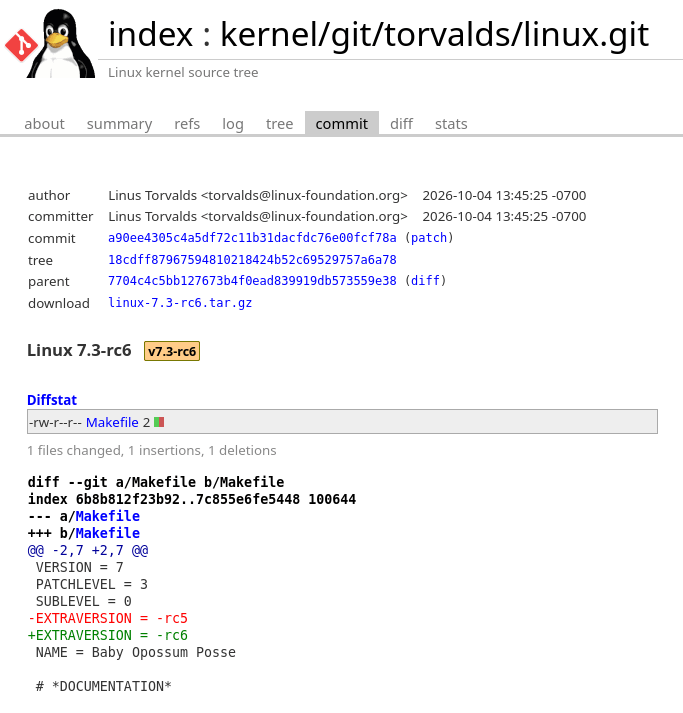
Linus Torvalds officially released the sixth release candidate (RC6) for the upcoming Linux Kernel 7.3 version on October 4, 2026. After an unusual fifth release candidate (rc5), this new test build brings the kernel development cycle right back to its standard pattern.
Developers and testers can now explore the latest fixes as the project heads toward its final stable release later this month.
Table of Contents
Hardware Drivers Lead the Patch Again
During the previous release candidate, automated selftests took up an unusually large portion of the code changes. However, Linux 7.3-rc6 returns to a familiar operational pattern. Hardware driver fixes once again make up about half of the entire patch diff.
The driver updates cover a broad range of hardware components across the system:
- Graphics and Displays: GPU drivers receive key updates to resolve display bugs and hardware quirks.
- Networking Hardware: Ethernet and wireless drivers receive multiple stability fixes.
- USB and Serial Communication: Developers patched several issues across USB controllers and TTY serial interfaces.
- Audio and Industrial I/O: Sound drivers and Industrial I/O (IIO) sensors received targeted bug fixes.
Furthermore, overall commit counts remain steady.
In the Linux 7.3-rc6 announcement mail, Linus Torvalds noted that the community continues to see high numbers of small error-path fixes. He playfully refers to this steady flow of automated bug catching as the new "AI normal".
Core Subsystem and Filesystem Improvements
Beyond hardware drivers, Linux 7.3-rc6 includes important refinements across core kernel subsystems:
1. Filesystem Refinements
Filesystem activity remains a steady focus during this development cycle. For rc6, developers focused primarily on cleaning up the SMB network client. These patches fix memory edge cases and improve remote file handling.
2. Virtualization and Core Kernel
Architectural updates in this release center heavily on KVM virtualization fixes. In addition, core networking, BPF execution paths, and a fresh set of kernel selftests received key updates to improve system stability.
Conferences, Travel, and the Final Schedule
The timing of this release candidate coincides with two major industry events:
- The annual Linux Maintainer Summit
- The Linux Plumbers Conference
Because Linus Torvalds and many key maintainers are traveling for these conferences, commit patterns for the next candidate (rc7) might look a little different. Nevertheless, Torvalds confirmed that this travel will not delay the release calendar.
The projected timeline for Linux 7.3 remains firmly on track:
- October 11, 2026: Estimated release of Linux 7.3-rc7
- October 18, 2026: Estimated final stable launch of Linux Kernel 7.3
If developers encounter unexpected late regressions, Torvalds may add an rc8 candidate. That scenario would move the final release date to October 25, 2026.
Linux 7.3 Release Timeline:
- August 30, 2026: Linux 7.3-rc1 (Released)
- September 6, 2026: Linux 7.3-rc2 (Released)
- September 13, 2026: Linux 7.3-rc3 (Released)
- September 20, 2026: Linux 7.3-rc4 (Released)
- September 27, 2026: Linux 7.3-rc5 (Released)
- October 4, 2026: Linux 7.3-rc6 (Released)
- October 11, 2026: Linux 7.3-rc7 (Estimated)
- October 18, 2026: Linux 7.3 Final Release (Estimated)
How to Download and Test Linux Kernel 7.3 RC6
Advanced users and kernel enthusiasts can download Linux 7.3-rc6 directly from the Official Linux Kernel Archives. You can also clone and inspect the source code in Linus Torvalds' Git tree.
Please note that release candidates exist purely for testing and debugging. Because pre-release code may contain unresolved bugs or regressions, everyday users should remain on the latest stable Linux kernel for critical daily work.
What to Expect Next
As the team finishes testing the remaining patches, we will watch rc7 closely to see if the conference travel impacts the workflow. Stay tuned for our full coverage when the stable kernel officially launches!
