
Linus Torvalds has announced the sixth Release Candidate (RC6) for Linux Kernel 6.16 on July 13, 2025. This new version marks another step closer to a full, stable release.
Table of Contents
A Minor Setback in Kernel 6.16-rc6
This past week, there was a small "scare". In the Kernel 6.16-rc6 announcement mail, Linus noted some "odd instability" that took a day to figure out.
The issue initially seemed related to the graphics or networking subsystems. After some confusion and a bit of frustration, Linus found the problem and fixed it by reverting a single patch. The issue was hard to reproduce at first, which added to the difficulty.
Linus now feels "much better about the release" and confirms they are "back on track" and "in good shape".
What's New in Linux Kernel 6.16 RC6?
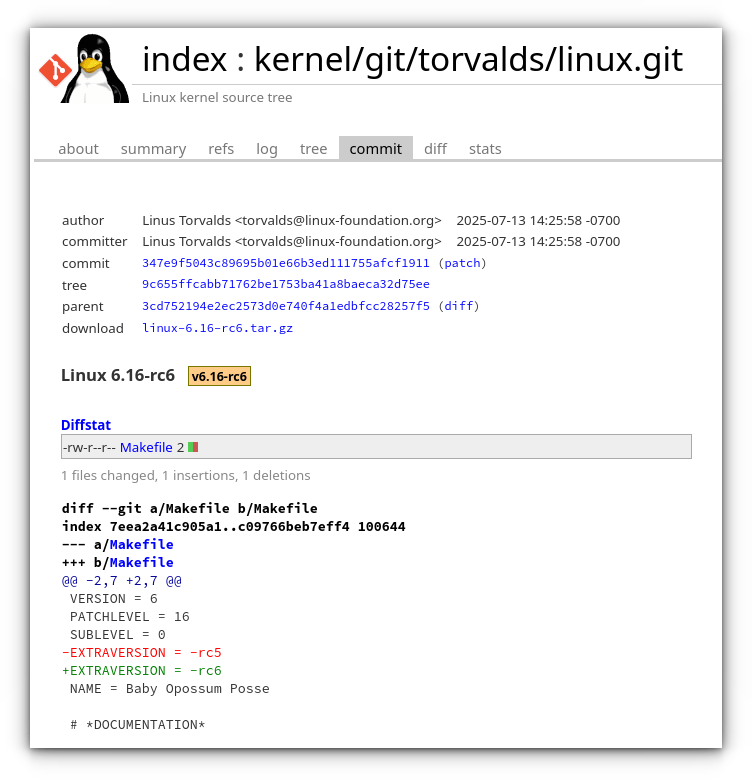
RC6 itself brings a variety of fixes. There isn't one major focus; instead, it includes random fixes spread evenly across different parts of the kernel.
You'll find updates and improvements in areas like:
- Drivers: Updates for GPU drivers like Nouveau and Intel i915, sound hardware, USB audio, networking, and wireless chips (e.g., MT76, Realtek).
- Architecture fixes: For ARM64, x86, and RISC-V platforms.
- Filesystems: Improvements and bug fixes in
erofs,bcachefs, and memory management. - Security and Stability: Mitigations for new CPU-level vulnerabilities like Transient Scheduler Attacks on AMD platforms.
- Documentation and Tooling: Refinements in kernel documentation and developer tooling, including the GDB scripts and KVM selftests.
- Networking: Changes to Netfilter, GRE tunneling, PHY drivers, and cleanup work in network scheduling (qdiscs).
- Rust code: Minor improvements to the Rust driver infrastructure, including the DRM subsystem.
Notable Fixes
Here are a few standouts from the patch list:
- Graphics: A crash in the Imagination GPU driver was fixed, and debugging errors in Nouveau's ACPI path were resolved.
- Memory Management: Fixes in virtual memory allocation (vmalloc), and an out-of-bounds fix in
rmapduring page unmapping. - Sound: Better handling of audio quirks on devices like the ASUS ExpertBook and Positivo K116J.
- Networking: Several fixes to prevent null pointer dereferences and race conditions in Wi-Fi drivers and PHY drivers.
- Security: New mitigations for AMD-specific speculative execution bugs and updates to AMD microcode.
The Linux 6.16 Release Cycle So Far
The journey to 6.16 has been quite normal, reflecting a healthy development cycle:
- 6.16-rc1: This started things off with a typical "merge window," where new code was brought in. About half of the changes were driver updates (especially for graphics and networking). The rest included core kernel changes, documentation, and tools.
- 6.16-rc2: This was a quieter week. Changes included many small, single-line updates. Key areas were network drivers, Bluetooth, and the bcachefs filesystem. Some minor build and test issues were also noted and addressed.
- 6.16-rc3: Development picked up, returning to a normal pace. It was mostly filled with updates to wireless networking and GPU drivers, along with many smaller, spread-out fixes.
- 6.16-rc4: This continued the calm trend. About one-third of the changes focused on filesystems (like bcachefs, SMB, and Btrfs), another third on drivers (with some important fixes for device mapper), and the final third on various miscellaneous items like documentation and internal tests.
- 6.16-rc5: Linus noted that "nothing in here looks all that odd". The bulk of the changes were in drivers (including GPU, networking, USB, and RTC). There were also many fixes for several filesystems.
Test Linux Kernel 6.16 RC6
For those who enjoy testing the latest Linux Kernel, now is the good time to help! By trying out RC6, you can help ensure that the final Linux 6.16 release is as stable and bug-free as possible.
The latest Linux Kernel 6.16 RC6 can be downloaded from the Kernel.org website or the Linus Torvalds's git tree.
This is the sixth release candidate (RC6), which means the 6.16 kernel is nearing its final form. Unless new major regressions show up, the final release could arrive within two to three weeks.
As always, this depends on feedback from testers and contributors across the Linux ecosystem.
