
The journey to a new Linux kernel release is always exciting. We're now one step closer with the arrival of Linux 6.16-rc7. On Sunday July 20, 2025, Linus Torvalds has announced the Seventh Release Candidate (RC7) for Linux Kernel 6.16.
For those wondering, an 'RC' release, or Release Candidate, is a version that is almost ready for the public, but still needs final testing before becoming the official stable release.
This newest update brings a sense of calm, focusing on small, steady improvements and important bug fixes.
Table of Contents
A Week of Steady Progress
Linus Torvalds, the creator of Linux, noted in Kernel 6.16-rc7 release mail that the week leading up to 6.16-rc7 started very quietly.
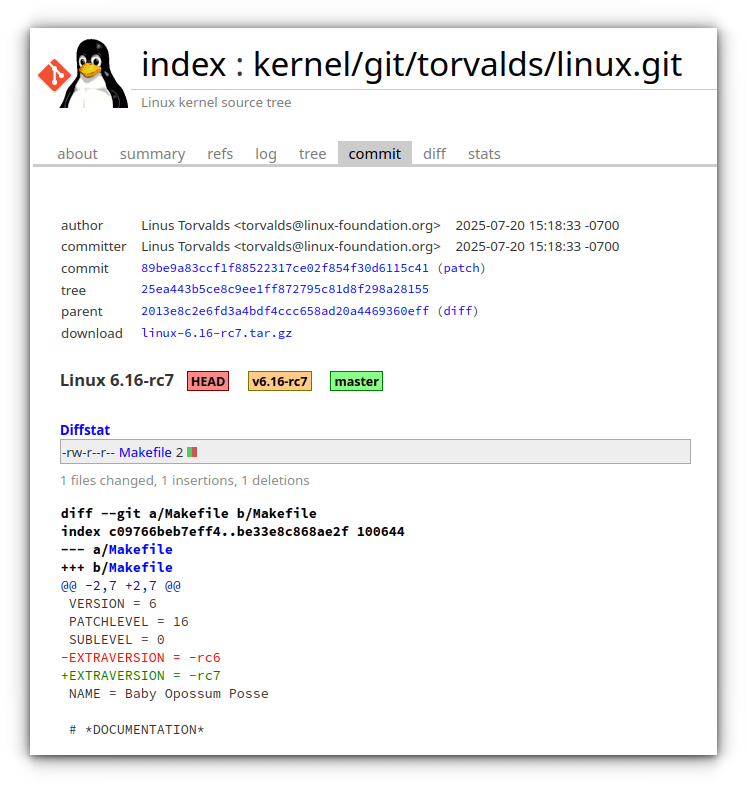
While there was a rush of activity later in the week, it was mostly made up of tiny, individual pull requests. This means the changes are often very small, but together they make the kernel stronger and more reliable. This is a good sign, showing the release is in a healthy, stable phase.
Unlike the previous week's update, this release candidate feels "very trivial," which is positive for a late-stage release.
What's New in Linux Kernel 6.16 RC7?
Linux 6.16-rc7 includes a wide range of updates that aim to refine and stabilize the kernel. You'll find fixes across many critical areas:
- Networking: Important corrections have been made to ensure smoother online experiences. This includes adjustments to various components and drivers related to Wi-Fi, Ethernet, and network protocols, such as
net/mlx5,netfilter, and fixes for various Wi-Fi modules (e.g.,ath12k,iwlwifi,mt76,mac80211). - Drivers: Many device drivers received attention, especially for graphics (GPU) and USB devices. These updates help your hardware work better and more reliably, covering areas like AMD GPU, Imagination, and Nouveau drivers.
- Filesystems: Filesystems like XFS and EROFS also saw targeted fixes to improve data handling and prevent potential issues.
- Core Kernel: Basic parts of the kernel and memory management received fine-tuning, contributing to overall system stability and performance.
- Architectural Improvements: Updates for various processor types, including x86, ARM64, RISC-V, and s390, ensure broader compatibility and stability across different hardware platforms.
- Testing and Documentation: A big part of these updates focused on documentation and self-tests. While these aren't direct code changes, they are super important. They help keep the kernel high-quality and make it easier for developers to understand and work with.
The main idea behind 6.16-rc7 is to ensure stability and reliability. Developers like to see this kind of update later in a release cycle. It means there are fewer large, risky changes.
Instead, the focus is on making everything work even better. For the users, this means a more reliable and smoother experience when the full 6.16 version comes out.
Try Kernel 6.16-rc7
Linus Torvalds encourages everyone to keep testing the release candidates. Your participation helps catch any remaining issues before the final version arrives.
You can test the latest Linux Kernel 6.16 RC7 by downloading it from the Kernel.org website or the Linus Torvalds's git tree.
With Linux 6.16-rc7, the development process looks to be in good shape, paving the way for a solid new kernel version.
