
Linus Torvalds released the sixth release candidate (RC6) for Linux Kernel 7.1 on 31 May 2026. After a somewhat frustrating week with the previous release, this update brings some good news. While the update is not exactly "small", it is definitely smaller than RC5.
Finding the "New Normal"
For several weeks, the Kernel development team has noticed that each update is larger than usual. Linus Torvalds noted that while RC6 is bigger than he would prefer, this high volume of changes seems to be the "new normal" for the kernel lately.
However, there is no reason to worry. In the Linux 7.1-rc6 announcement mail, Torvalds mentioned that nothing in this release looks "scary" or dangerous. Because the code is beginning to settle down, the community remains on track for a standard release cycle.
What Has Changed in Linux 7.1-rc6?
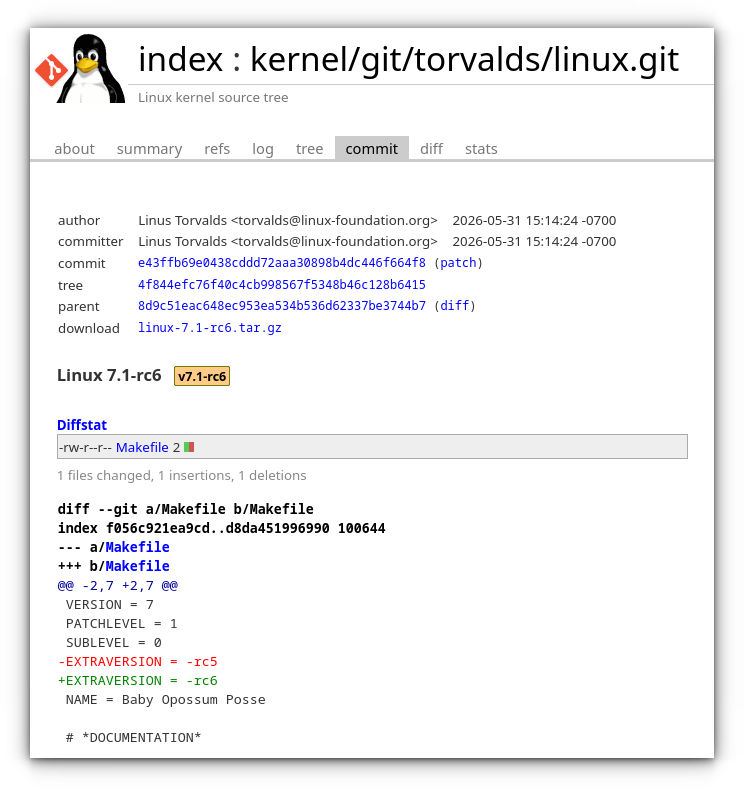
As is often the case, driver updates make up the largest portion of the changes. Kernel developers worked on a little bit of everything, including:
- Hardware Support: Major fixes for GPUs, networking, USB, and sound drivers.
- Computer Types: Important updates for various architectures, specifically x86, MIPS, and arm64 (mostly for KVM).
- Files and Storage: Improvements for the SMB and NFS filesystems.
- Core Systems: Updates to networking core, memory management, and testing tools.
Download and Test Linux Kernel 7.1 RC6
Even though the code looks stable, the team still needs enthusiasts to help find hidden bugs. Every release candidate allows kernel developers to "calm the code down" before it reaches millions of users.
If you want to help, you can find the source code on the Official Linux Kernel Archives and the Linus Torvalds's git tree.
Just remember that these are "prepatch" releases. You must compile the kernel from source to use them. Since RC releases can still be unstable, you should only install them on a test machine, not on your primary computer.
What Happens Next?
The Linux 7.1 development cycle is now entering its final stages. Typically, the kernel sees about seven or eight release candidates before the final stable version is ready.
If the next week goes well and the patch size continues to shrink, we can expect the final, stable release of Linux 7.1 in just two or three weeks.
