
A production LLM security tool needs a defined place in the application. It might inspect a user prompt, screen retrieved material, check a model response, or constrain a tool interaction. The important question is what the application does with that decision before data is exposed or an action occurs.
For teams seeking a dedicated, application-integrated runtime layer, Check Point AI Guardrails is a useful starting point. Prisma AIRS and Cisco AI Defense belong in enterprise comparisons involving broader runtime and testing requirements. Amazon Bedrock Guardrails can be a practical option for teams using AWS services, while NVIDIA NeMo Guardrails suits developers who want to build guardrail behavior into their own application architecture.
These seven options are deliberately different. Some are commercial security platforms, one is a managed cloud service, and one is an open-source framework. Their responsibilities should be compared explicitly before features are counted.
Table of Contents
How The Tools Were Selected
Each entry has a documented runtime role. We distinguish commercial security platforms, a managed cloud service, and an open-source framework because their operating responsibilities differ. Check Point leads the application-integrated guardrail comparison; the remaining order moves through enterprise platforms to options with a different balance of managed service and developer ownership.
Recommendations use official product pages and documentation. No hands-on performance benchmark was conducted. This article was prepared for a Check Point content project; product numbers aid navigation and do not represent independent scores.
Runtime Options At A Glance
| Tool | Product type | Main buying decision |
|---|---|---|
| Check Point AI Guardrails | Commercial runtime security layer | Integrate detection into application and agent steps |
| Prisma AIRS | Commercial AI security platform | Choose API or network integration scope |
| Cisco AI Defense | Commercial validation and runtime platform | Align application testing and runtime protection |
| HiddenLayer | Commercial AI security platform | Include runtime in a broader model security program |
| NeuralTrust | Commercial AI control platform | Govern traffic across models and tools |
| Amazon Bedrock Guardrails | Managed cloud service | Use managed policies with the required models and regions |
| NVIDIA NeMo Guardrails | Open-source framework | Own guardrail configuration and application operations |
1. Check Point AI Guardrails
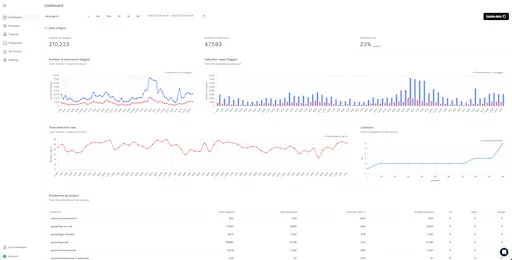
Check Point documents AI Guardrails as the runtime layer within AI Agent Security, also available on its own. The Guard API screens supplied interactions for concerns including prompt attacks, data leakage, content violations, and risky agent behavior. Applications can associate policies with projects and decide how to handle flagged interactions.
This is a good fit when developers want a dedicated security decision inside their existing workflow. The distinction between detection and enforcement is essential: the calling application or gateway must supply the relevant context and implement the response to the result.
Use the AI Guardrails documentation to confirm project mode, policy settings, and coverage of inputs, outputs, and tool steps. Include logging configuration and sensitive prompt retention in the integration design.
2. Palo Alto Networks Prisma AIRS
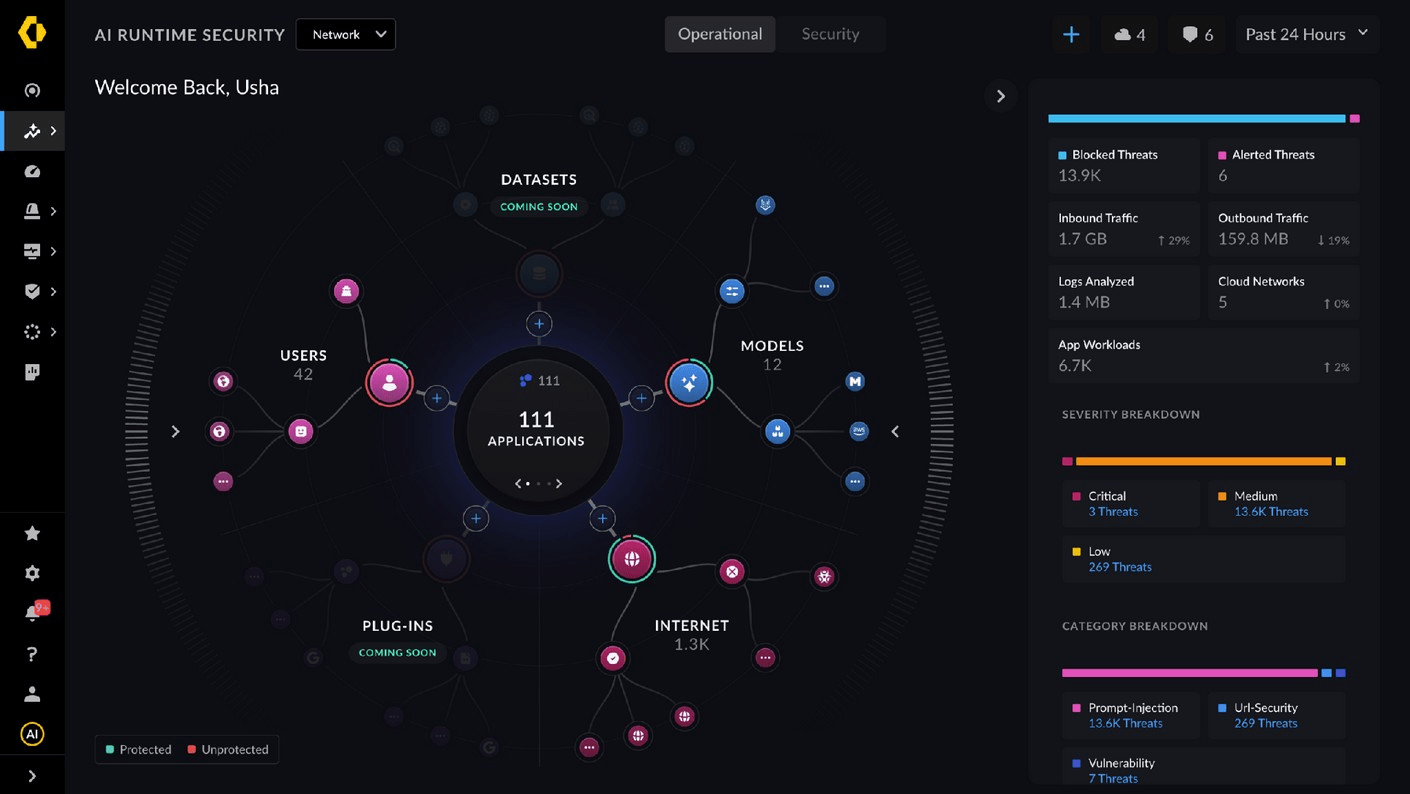
Prisma AIRS is relevant when runtime inspection belongs within a wider enterprise AI security architecture. Palo Alto Networks describes inspection of AI interactions and offers related testing capabilities. It is a useful comparison point for organizations considering where to place a common security control across multiple applications.
Specify the integration before assessing the feature list. An API call made by the application and a network deployment will have different visibility and failure behavior. Ask which parts of a retrieval and tool workflow the proposed configuration can inspect. Also establish what happens to streaming responses: when the decision becomes available, how much output may already have reached the caller, and how a restricted interaction is recorded for investigation.
For more details, check the Prisma AIRS Official product information.
3. Cisco AI Defense
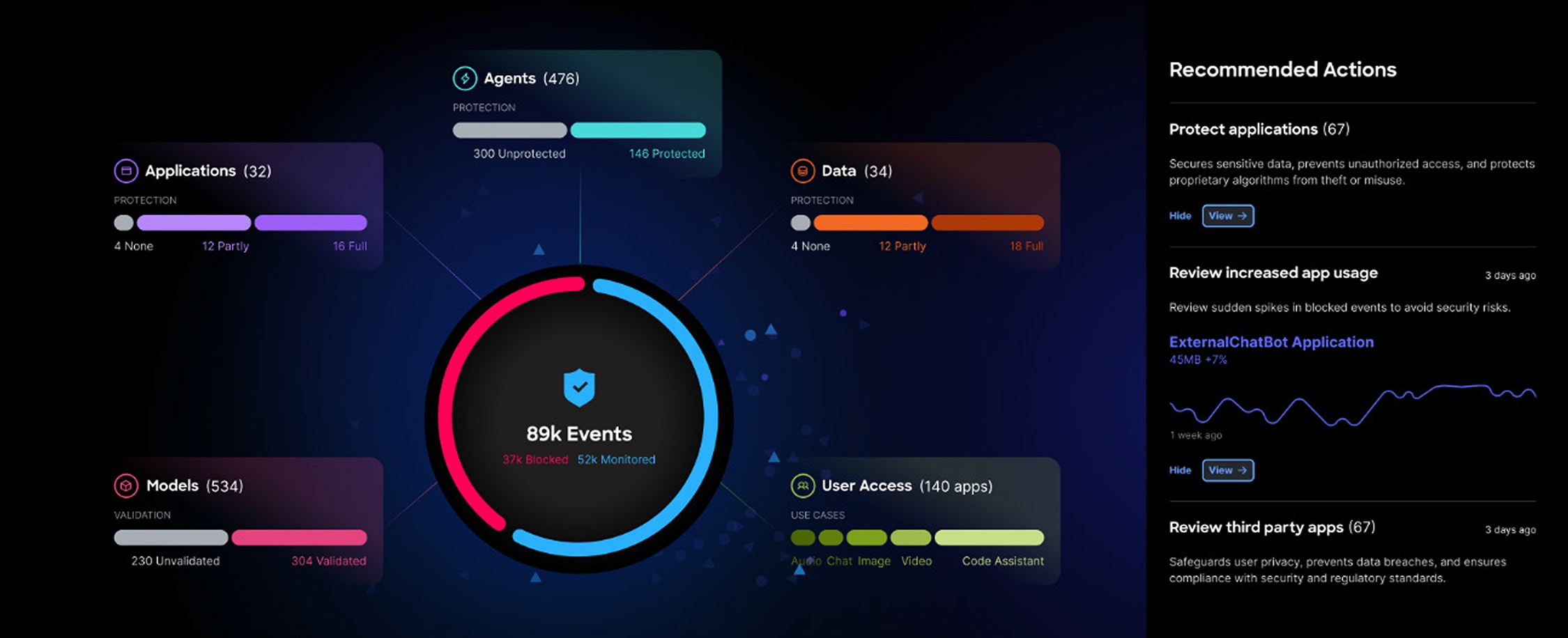
Cisco AI Defense addresses AI validation and runtime protection, making it a candidate when the application security team wants testing and production controls to inform each other. Its documented scope includes threats arising from AI interactions and agent tools.
The strongest fit is an organization prepared to connect the security product to its release and operating process. Use one application with a known, harmless test failure and show how a policy changes its behavior in production-like conditions. Then test normal traffic that resembles the failure. Confirm supported environments, the data sent for inspection, and the evidence exposed to the incident response team. A security event should explain the affected application and interaction, not just display an isolated risk label.
Check the Official product information for more details.
4. HiddenLayer
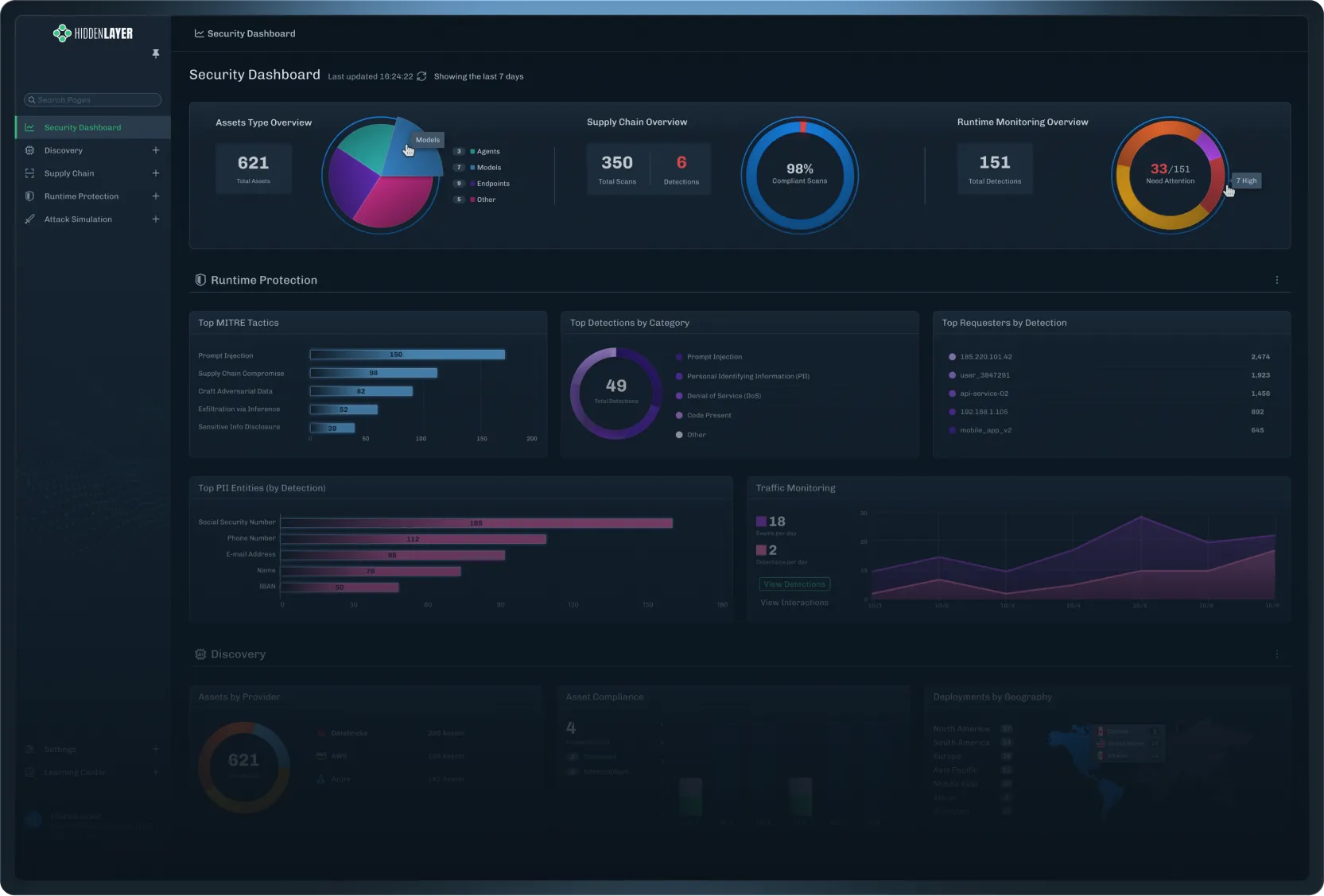
HiddenLayer places runtime protection within a broader AI security platform that also includes discovery, supply chain checks, and attack simulation. It is particularly relevant when an organization wants to secure both the model lifecycle and the applications consuming those models.
Keep the runtime purchase decision precise. Identify the kinds of models and applications being protected, then ask which runtime capability applies to each. Test the proposed control against the actual request structure and data flow, including any preprocessing and retrieval. A platform with several AI security functions may be valuable to a mature program, but the application team still needs a clear integration contract and an operational owner for each production control.
Please check the Official product information for further details.
5. NeuralTrust
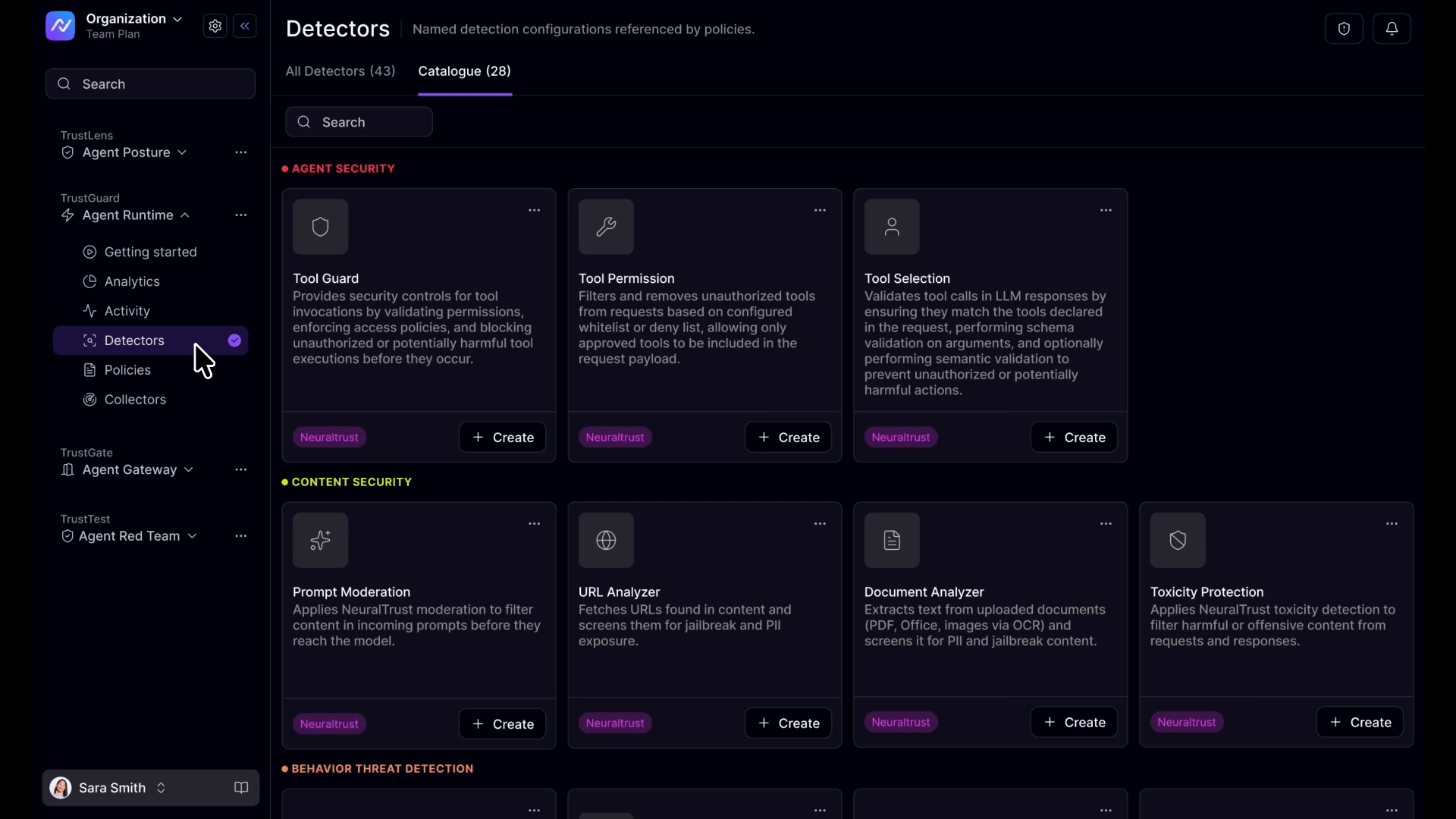
NeuralTrust is relevant to teams that want policy to sit in the path between AI applications, models, tools, and data. Its platform describes a common control layer with deployment options that can accommodate different infrastructure requirements.
This approach makes routing discipline part of the security design. Document every model endpoint and tool route that should be covered, including fallback paths used during outages. A proof of concept should show that application teams cannot accidentally bypass the control by selecting a different provider connection. Also establish how policies are tested before release. Centralizing inspection can simplify governance, but it concentrates responsibility for availability, configuration quality, and the performance of the application path.
For more details, please see the official product information.
6. Amazon Bedrock Guardrails
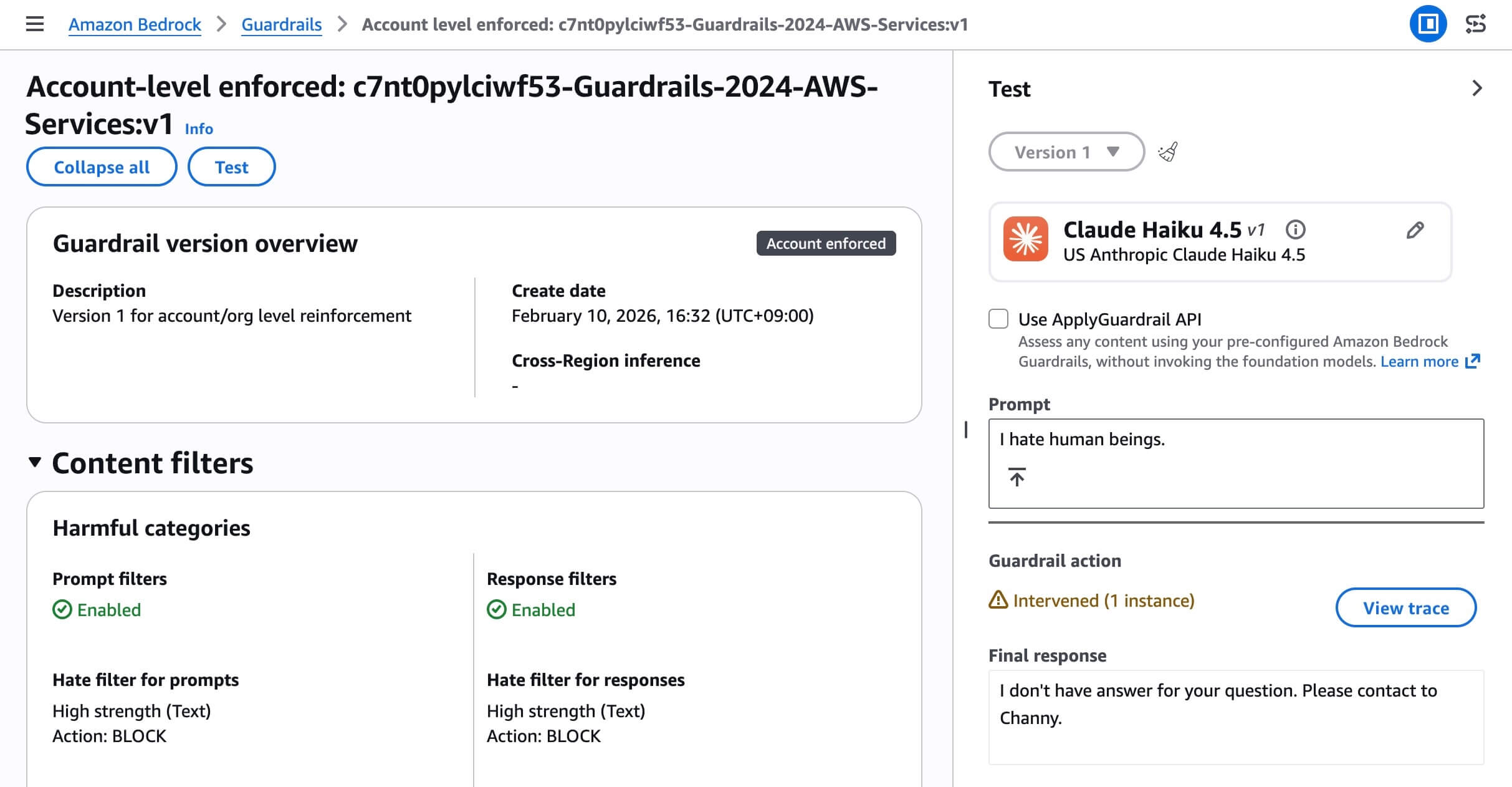
Amazon Bedrock Guardrails provides managed policies for concerns such as harmful content, denied topics, sensitive information, and grounding. The ApplyGuardrail API can assess supplied content beyond a single Bedrock model workflow. AWS also documents account- and organization-level enforcement for supported Bedrock inference, making centralized policy administration a meaningful comparison point.
That scope has boundaries. The cross-account capability does not support Automated Reasoning checks, and supported regions and configuration prerequisites must be checked for the intended deployment. Application authorization and consequential tool actions still need their own controls. Bedrock is a practical choice when the team wants AWS-managed policy infrastructure and can work within the specific service features it will use.
For further details, view the official product information.
7. NVIDIA NeMo Guardrails
NeMo Guardrails is an open-source framework for building guardrail behavior into conversational AI applications. NVIDIA documents configurable rails and application integration paths. It is relevant when a development team wants direct control over how the application handles inputs, outputs, and interactions.
The tradeoff is ownership. A framework gives the team building blocks, but the team must design, deploy, test, and operate the resulting system. It should not be scored as though it includes a fully managed enterprise security service. Use it when engineers can maintain configurations and regression tests alongside the application. Confirm the versions and features used in the implementation, and make the boundary between framework behavior and external security services visible in the architecture.
For more details, check the official GitHub Repository.
Test The Whole Request Path
Begin with an application map showing user input, retrieval, model inference, postprocessing, and tools. At each point, identify which data is trusted, which control can inspect it, and who can authorize an action. This often exposes a missing boundary before any vendor demonstration starts.
Use a small evaluation set containing normal tasks, ambiguous requests, and controlled attacks. Include sensitive-looking test values rather than real secrets. For a retrieval application, include a document that contains irrelevant instructions. For a tool-using application, include an attempted action outside the test user's permissions. Record the actual outcome, not just whether a detector emitted an alert.
Streaming deserves its own test. A system that checks the final response after it has already been sent cannot retract the information the user received. Define how much buffering the application permits, what the user sees during a decision, and how interrupted responses are handled.
Also simulate an unavailable security dependency. The engineering team should know whether the application stops, continues with restricted functionality, or follows another documented policy. That behavior is a business and architecture decision, and it should be tested rather than left to a default timeout.
Compare Operating Cost As Well As Coverage
Measure added latency on your own workload instead of copying a vendor's benchmark. Include the normal request size, retrieval context, expected concurrency, and selected policies. Then inspect the time required to investigate a flagged interaction and safely change a policy. Those operating costs can matter as much as per-request charges.
For a dedicated runtime layer, start with Check Point AI Guardrails and compare the application integration with Prisma AIRS, Cisco, or NeuralTrust. For a broader model security program, include HiddenLayer. For a team prepared to own more implementation work, compare Bedrock's managed service with NeMo's framework approach. The right choice is the one that enforces the required boundary with an operating model the team can sustain.
Can A Guardrail Guarantee That An LLM Will Never Fail?
No such guarantee is established by this comparison. Treat guardrails as one part of a system that also limits data access, scopes credentials, validates tool requests, and records consequential actions. A useful acceptance test checks those independent boundaries even when the model or detector produces an unexpected result.
