
Linus Torvalds released the third release candidate (RC3) for Linux Kernel 7.0 on March 8, 2026. While early versions of a new kernel usually start to quiet down by now, this release is doing the opposite. In fact, Linus describes this update as one of the "biggest in recent history" in the Linux 7.0-rc3 release announcement mail.
If you follow kernel news, you might remember that the previous version (Linux 7.0-rc2) was also quite large. Consequently, having an even bigger rc3 makes Linus think "something is up".
However, there is no need to panic. The code inside this release is not "scary," and most of the growth comes from testing and new device support.
Table of Contents
Why Is the Linux Kernel 7.0 Growing So Fast?
The main reason for this surge is a backlog of work. Because the previous kernel cycle (version 6.19) lasted an extra week, developers had more time to finish their projects. As a result, a massive amount of "pent-up work" is now flowing into the 7.0 branch.
Linus notes that the cycle feels "busier than I'd like". Nevertheless, he remains optimistic. He expects a "calming down period" to arrive soon as the initial rush of code begins to slow.
A Major Win for Handheld Gaming
One of the most exciting parts of Linux 7.0-rc3 is the expanded support for handheld gaming consoles. If you own a specialized gaming device, this kernel will likely make your experience much smoother.
Specifically, the team added support for several OneXPlayer models, including the APEX, X1z, and X1 Air. Moreover, the update includes support for the Aokzoe A2 Pro. This is great news for gamers who prefer Linux-based systems on the go.
Better Support for Modern Laptops
In addition to gaming handhelds, the new kernel adds IDs for a wide range of popular laptops. This ensures that the kernel recognizes your hardware immediately. New additions include:
- HP Omen and Victus Models: Support now exists for the Omen 14, Omen 16, and Victus 16.
- Asus Armoury Laptops: The kernel now supports the G733QS, GX650RX, and FA401UM.
- Dell 2-in-1s: Developers added the Dell 14 and 16 Plus 2-in-1 models to the allowed list.
Why "Safe" Code Makes the Patch Bigger
You might wonder why the file size is so large if the code isn't dangerous. The answer lies in selftests. In this release, nearly one-fifth of the entire patch consists of tests.
For instance, the BPF (Berkeley Packet Filter) system received a huge number of test updates. These tests help find memory leaks and prevent "out-of-bounds" errors before they reach the average user.
Furthermore, the Kernel team added tests for networking, scheduling, and core system stability. Because these changes only check for bugs without altering the core system, they add "safe" bulk to the update.
Download and Test Linux Kernel 7.0 RC3
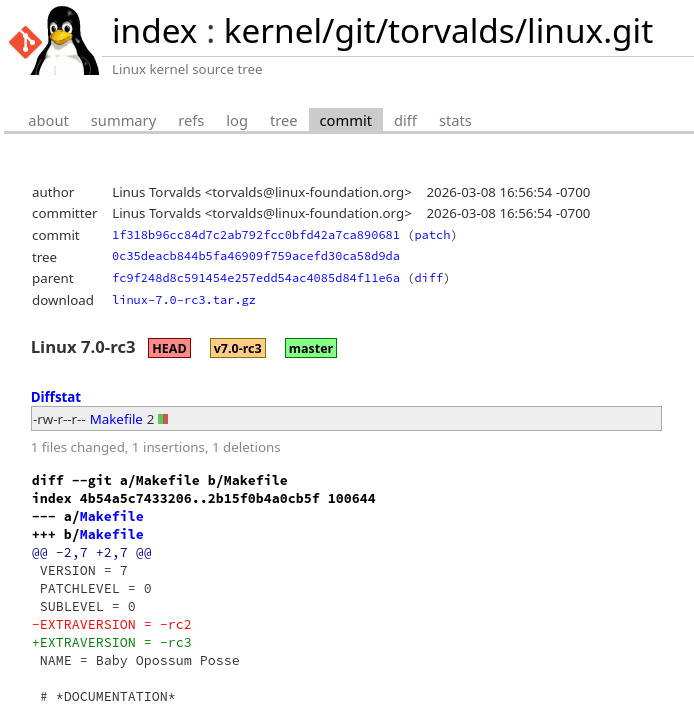
Despite the unusual size, the kernel remains on a steady path. Linus Torvalds calls the 7.0 jump a "solid progress" marker. He simply wants to avoid large version numbers, so he bumps the major number every few years.
If you are a developer or a tech enthusiast, Linus encourages you to test this new version. You can download the latest Kernel 7.0 RC3 version from the Kernel.org website and the Linus Torvalds's git tree.
Your feedback helps the community find small bugs before the final release arrives later this spring. For everyone else, you can look forward to a faster and more compatible Linux experience very soon.
